Water Pipes in the House: PVC or PPR, Embedded or Exposed — What's Right for Your Home
Water pipes in a house need planning alongside the design, not left to the crew on site. PVC pipe under Thailand's TIS 17-2561 standard works well for cold water, while PPR suits hot-water runs. Embedded pipes look cleaner but are harder to repair, while exposed or access-panel routing is easier to fix. Always pressure-test the system before any wall closes, to avoid problems that are far costlier once the wall is sealed.
- Plan water pipes alongside the house design, not after walls go up.
- Use PVC for cold water and PPR for hot-water sections.
- Pressure-test the whole pipe system before any wall closes.
- Install separate shut-off valves so repairs don't require cutting water to the whole house.
Water Pipes in the House: Why You Must Decide Before the Walls Go Up
Water pipes in the house are one of the hardest things to fix once you’ve made the wrong call early on. Once walls are built and plastered, moving a pipe run means chipping open a wall you just finished — a problem many houses in Korat and Isan run into later when they want to add a tap.
Good planning for water pipes in the house has to happen alongside the house design, not be left to whichever worker is on site that day. The location of the bathroom, kitchen, and laundry area all determine the main pipe route running from the water meter into the house.
Homeowners who understand the big picture on water pipes early can talk to their builder far more precisely, and cut the odds that plumbing becomes the one thing that has to be torn out and redone after moving in.
PVC vs. PPR Pipe: What’s the Real Difference
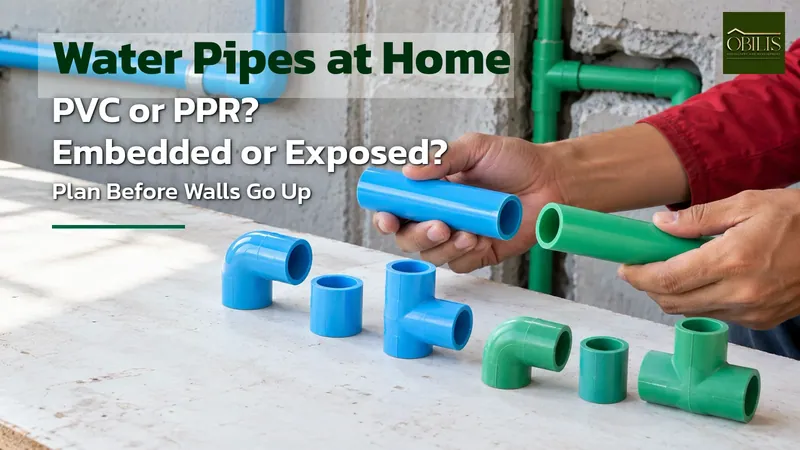
PVC pipe is by far the most common material in Thai homes. Under the TIS 17-2561 standard, PVC pipe for drinking water is rated for a maximum working pressure of 13.5 bar at a reference temperature of 27°C, and comes in thickness classes from PVC 5 up to PVC 13.5 (according to Thailand’s Industrial Standards Institute).
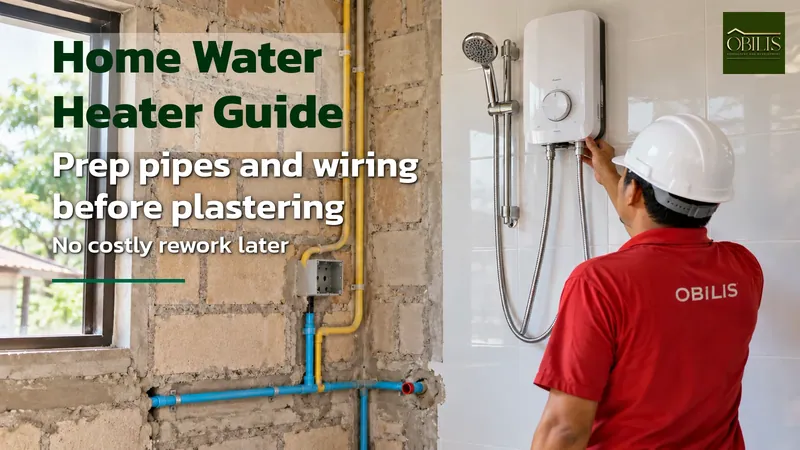
PPR pipe handles heat better, so it’s the usual choice for hot water lines running from a water heater. PPR joints are heat-welded rather than glued, which makes for a tighter seal, but it requires a worker with the right welding tool and specific experience.
For ordinary cold-water lines in a Korat or Isan home, standard PVC still does the job well and costs less. Switch to PPR only for the sections that carry hot water directly — there’s no need to redo the entire system.
Embedded in the Wall or Run Exposed — What Suits Your House
Pipes embedded in the wall look cleaner, since nothing is visible at all. The downside is that if a pipe leaks later, finding it means chipping into the wall, which is far harder than fixing a pipe that was run exposed.
Running pipes exposed, or hidden inside an access panel that can be opened for inspection, is becoming more popular in new builds, because it allows checking and repair without destroying the wall. The tradeoff is designing the access panel so it doesn’t look out of place.
A balanced approach is to embed pipes only in straight, trouble-free sections, and leave access panels at every joint or multi-directional bend, since joints tend to leak far more often than a straight run of pipe.
Pressure-Testing Before the Wall Closes — A Step You Can’t Skip
Before any wall closes over a pipe run, the system must always be pressure-tested first — pumping water into the pipe and holding it to see whether pressure drops within the expected time. A fast drop means there’s a leak that needs fixing before the wall goes up.
This step takes little time compared with the damage of skipping it. A leak discovered after the wall is closed costs far more to fix, since it means chipping the wall open, repairing the pipe, then re-plastering and repainting.
Homeowners should ask to witness the pressure test themselves, or at least get photos as a record, since this is one of the hardest things to verify after the fact once the wall is sealed.
Placing the Water Meter and Main Lines for Easy Future Repairs
Good water pipe design in a house needs separate shut-off valves at different points, not a single main valve at the meter. If the upstairs bathroom has a problem but the whole house has to be shut off to fix it, that’s an unnecessary inconvenience for everyone in the house.
Leave the main pipe route somewhere accessible — such as under a raised floor, or through a dedicated access channel designed in from the start — rather than burying it deep inside structure that can’t be reached later.
Planning the main pipe route together with the pump and water tank location from the beginning keeps the whole water system working in harmony, and reduces unnecessary overlapping pipe runs.
Have the Designer Plan Water Pipes Alongside the House Plan
Houses with the fewest plumbing headaches are usually the ones where the designer planned the water pipe system together with the architectural drawings from the start, rather than leaving each decision to whoever happens to be on site — because only then can clashing pipe runs be caught on paper.
OBILIS designs the plumbing layout alongside every house plan, and recommends that homeowners witness the pressure test before any wall is closed, to reduce the risk of problems that are hard to fix later.
To get a rough idea of your budget, try the house budget planner, or contact the team to discuss the details.
Whichever team you build with, confirm two things: materials chosen to a verifiable standard, and a pressure test performed before every wall closes. Those two things prevent more problems than choosing an expensive brand ever will.
Related reading: Home Sanitary Drainage: Waste Pipes, Inspection Pits, and Grease Traps — When to Plan Them, No Mains Water in Thailand: Planning a Year-Round Supply and Planning Air Conditioning During House Construction: What to Prepare Before the Walls Go Up
Frequently Asked Questions
How often should water pipes in a house be replaced?
PVC pipe installed correctly, and not struck by outside impact, typically lasts for decades without replacement. What’s worth checking periodically is the joints and valves rather than the pipe itself, since joints tend to wear out first.
There’s a leak somewhere but I can’t find it — what should I do?
Close off valves section by section to narrow down the area, then watch the meter with every tap in the house shut off. If the meter is still moving, the leak is in the main line and needs a technician with proper leak-detection tools.
Is it worth switching an old house’s steel pipes to PVC or PPR?
Worth it in the long run. Old steel pipe tends to corrode internally until the opening narrows and water pressure weakens. Switching to PVC or PPR in the appropriate sections brings water pressure back to feeling like a new house.
Key facts at a glance
| PVC drinking-water pipe standard | TIS 17-2561 |
|---|---|
| Maximum PVC working pressure under TIS | 13.5 bar at 27°C |
| PVC thickness classes | PVC 5 through PVC 13.5 |
| Where PPR is recommended | Hot-water lines from a water heater |
| Step required before closing a wall | Pressure-testing the pipe system |
| Reference authority | Thailand Industrial Standards Institute (TISI) |
Frequently asked questions
How often should water pipes in a house be replaced?
Correctly installed PVC pipe typically lasts decades. Check joints and valves periodically, since they tend to wear out before the pipe itself.
There's a leak but I can't find it — what should I do?
Close valves section by section to narrow the area, then watch the meter with every tap shut. If it's still moving, the leak is in the main line.
Is it worth switching old steel pipes to PVC or PPR?
Yes, in the long run. Corroded steel pipe narrows and weakens water pressure. Switching restores pressure to a new-house level.
Why is pressure-testing before closing a wall so important?
It's the only reliable way to catch a leak before it's sealed inside. Skipping it means a far costlier repair if a leak shows up later.