Home Water Heaters: Which Type to Choose, and How to Prep Pipes and Wiring Before Plastering
Home water heaters are usually the instant electric type, ideally carrying the Thai TIS safety mark, with common wattage running roughly 3,500-6,000 watts. The hot water pipe and a dedicated wire must be routed in before the walls are plastered, paired with a residual-current breaker and correct grounding, since a spot combining water and electricity carries the highest shock risk in a house. Confirming the model early avoids costly repairs later.
- Instant electric water heaters are the most common type
- Choose a model with the TIS safety mark; common wattage is around 3,500-6,000 watts
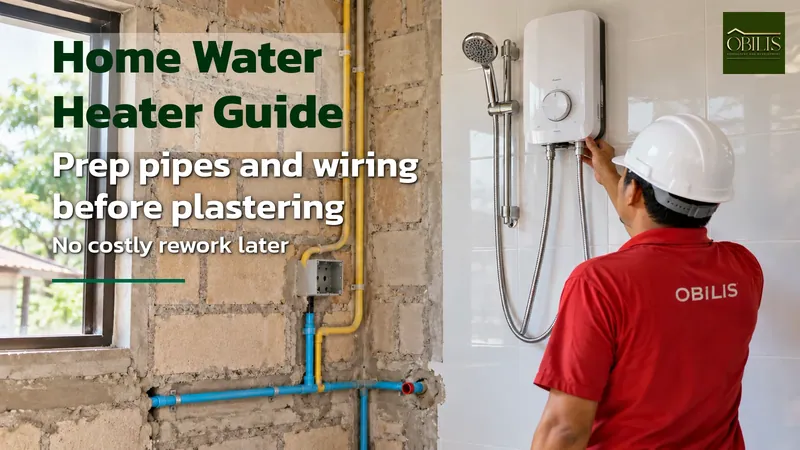
- Hot water pipe and dedicated wiring must be routed in before plastering, not drilled in later
- A residual-current breaker and correct grounding must always pair with the unit
How Many Types of Home Water Heaters Are There?
Home water heaters generally fall into two main groups: instant electric water heaters and gas water heaters. The electric type is more common in ordinary houses because it is easier to install and does not need a separate gas line, while the gas type delivers hotter water at stronger flow but needs better ventilation.
When choosing an electric instant water heater in Thailand, look for a model certified to the Thai Industrial Standard (TIS) for electrical safety, and check for the TIS mark on the unit or box before buying.
In 2025, the Thai Industrial Standards Council voted to add instant immersion-type electric water heaters to the list of controlled products, after finding many substandard units being sold online (based on news reporting of the TISI board’s resolution on 18 February 2025).
Why Plan a Home Water Heater Before the Walls Get Plastered?
A home water heater needs both a hot water pipe and a dedicated wire running straight from the main panel. Without routing that pipe and wire in before the walls go up, cutting into the wall later damages the structure and means redoing the finish.
What needs deciding in advance is the unit’s mounting spot, height off the floor, and the location of its dedicated switch or breaker. If these do not match the plan later, you may have to relocate the water or power connection during finishing, much harder than while the structure is still open.
Contractors who route pipes and wiring in advance usually ask the homeowner to confirm the exact model and position of the water heater before closing the wall, since changing your mind afterward disrupts several finished stages of work.
Does a Home Water Heater Need Grounding and a Residual-Current Breaker?
Every compliant electric water heater has built-in leak protection that must work together with a correctly connected ground wire. If a house’s grounding system is not complete, some water heater models simply will not turn on at all, as a safety precaution.
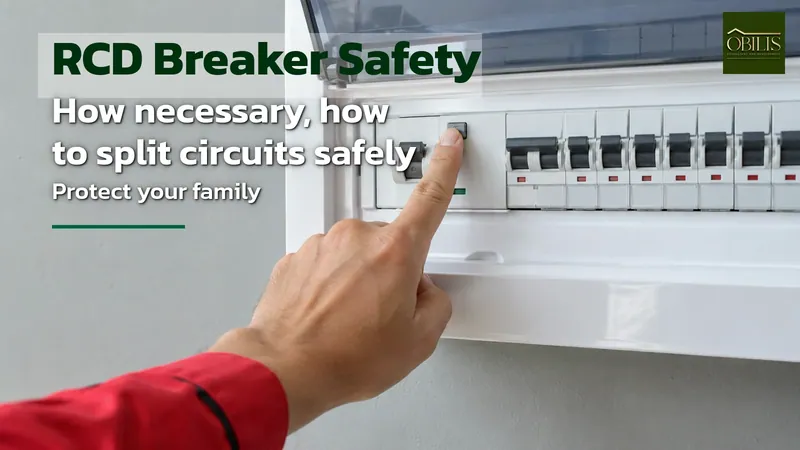
The water heater’s circuit should have its own dedicated residual-current breaker, not shared with general outlet circuits, since a point combining water and electricity is the highest-shock-risk spot in any house.
Checking the grounding and residual-current breaker on the water heater circuit should be part of the final home inspection before transfer, not something checked only after a problem shows up.
Choosing the Right Wattage for a Home Water Heater
Common home water heaters run roughly 3,500-6,000 watts (approximately). Higher wattage heats water faster and stronger at the same flow rate, but needs correspondingly larger wiring and a bigger breaker.
Houses with multiple water points running at once, say two bathrooms used around the same time, should also discuss the house’s total electrical meter capacity with an electrician, not just the wattage of each individual water heater.
Choosing wattage higher than necessary does not always heat water faster. If household water pressure is already low, that pressure issue needs fixing alongside choosing the water heater, not solved by wattage alone.
Where to Place a Home Water Heater in the Plans
The ideal spot is as close as possible to the point of use, to minimize the length of hot water piping needed. The longer the pipe, the longer hot water takes to arrive and the more heat is lost along the way.
Keep some distance from points with heavy steam buildup, like directly over a showerhead, and choose moisture-resistant wall material around the installation spot to reduce long-term wall damage from accumulated steam.
For houses with multiple bathrooms, planning every home water heater position together at the design stage lets the contractor route pipes and wiring systematically in one pass, instead of adding points room by room later, which usually costs more.
Let a Team That Plans Water and Electrical Systems Together Handle Your Home Water Heater
Installing a home water heater safely requires understanding both the plumbing and electrical systems together, not just buying a unit, hanging it on the wall, and wiring it into whatever outlet happens to be there.
OBILIS plans the hot water piping and electrical circuit for home water heaters into the design from the start, specifying the residual-current breaker and wire size matched to the wattage the homeowner chooses.
To get a rough idea of your budget, try the house budget planner, or contact the team to discuss the details.
Before picking a home water heater model, tell your contractor in advance so the pipe and wiring get sized to match the actual unit, since switching models after the wall is closed usually means unnecessary repair costs.
Frequently Asked Questions
How much electricity does a home water heater use?
A typical electric water heater runs roughly 3,500-6,000 watts (approximately), and only draws power while actually heating water. Short use of a few minutes at a time does not impact the electricity bill as much as appliances left running continuously.
Can you install a home water heater yourself without hiring an electrician?
You should not. It involves both the electrical and plumbing systems, which need correct grounding and a residual-current breaker. Have a qualified electrician install and test it before actual use.
How often does a home water heater need replacing?
Lifespan depends on water quality and how often each household uses it. A unit that starts heating unevenly or makes unusual noise should be checked and considered for replacement before its leak-protection system degrades too.
Key facts at a glance
| Standard to look for | TIS (Thai Industrial Standard) electrical safety mark |
|---|---|
| Common wattage range | Roughly 3,500-6,000 watts (approximately) |
| Most common type | Instant electric water heater |
| Required companion devices | Residual-current breaker and correct grounding |
| TISI controlled-product resolution date | 18 February 2025 (immersion-type water heaters) |
| Must be planned in advance | Hot water pipe and wiring before plastering |
Frequently asked questions
How much electricity does a home water heater use?
A typical electric water heater runs roughly 3,500-6,000 watts and only draws power while heating water.
Can you install a home water heater yourself without hiring an electrician?
You should not, since it involves both electrical and plumbing systems needing correct grounding and an RCD.
How often does a home water heater need replacing?
Lifespan depends on water quality and usage frequency; have it checked if heating becomes uneven.
How does a gas water heater differ from an electric one?
Gas units deliver hotter water at stronger flow but need better ventilation than electric units.