Designing a Vacation Home in Khao Yai: what should you plan for?
Designing a vacation home in Khao Yai starts with how the family actually uses the house, not the prettiest floor plan. Group the entrance, switches, and locks together so opening and closing takes only a few steps. Orient living rooms away from harsh west-facing afternoon sun, add a covered transition space between indoors and outdoors, and place windows on opposite walls so air keeps moving even when the house sits empty for weeks.
- Group the entrance, light switches, and locks near the front door so one person can open or close the house quickly.
- Face the main living room north or northeast and use eaves or louvers to block harsh west-facing afternoon sun.
- Add a covered semi-outdoor space between the interior and the garden or view.
- Place windows on opposite sides of a room so air keeps circulating even when the house is closed for weeks.
Start With How You’ll Actually Use the House, Not the Prettiest Floor Plan
A vacation home is used differently from a full-time house. People arrive for a long weekend or a school break, then close the place up for weeks at a time, so designing a vacation home in Khao Yai has to account for the empty stretches as much as the occupied ones.
Before anyone draws a plan, answer a few practical questions: how many people usually come, how often, and do they tend to arrive at night or in daylight. Those answers shape the location of the main door, the parking spot, and even how many bedrooms actually get used.
Plenty of houses around Khao Yai and Pak Chong look stunning in the render but feel awkward once a family is hauling suitcases through the door after dark. A layout built around real arrival habits usually ends up simpler than a show-home plan, and it holds up far better over years of weekend use.
Plan the Layout So Opening and Closing the House Is Easy
The first thing to get right is the entrance. The gate and front door should open easily for one person, not require two people wrestling with a stiff latch in the dark after a long drive up from Bangkok.
Keep the main light switches and the door locks grouped near the entrance instead of scattered around the house. Outlets for the fridge or the water pump should also sit somewhere you can reach without walking all the way around the building.
Think about a Sunday afternoon when everyone is rushing to beat the traffic back into the city. If closing up means shutting a dozen windows, locking several separate doors, and switching off lights room by room, a family eventually stops wanting to make the trip; a good layout lets you shut the whole house down in a handful of steps.
Position Rooms for the View Without Baking in the Afternoon Sun
A view of the Khao Yai hills or the open fields around Korat is usually the whole reason for building here, but placing the living room wherever the view looks best, without checking sun direction, often creates a room that’s unbearable exactly when you want to sit in it.
A living room facing west to catch the evening mountain view usually takes brutal afternoon sun, forcing the curtains shut from mid-afternoon onward. By the time the light is actually worth watching, the room has already turned into a greenhouse that needs the air conditioning on full blast.
As one example, orient the main window toward the north or northeast instead, and add a deep eave or a timber louver screen on the west side. You still get the mountain view, just without paying for it in heat all afternoon.
Build a Transition Space Between Indoors and Outdoors
A vacation home benefits from a semi-outdoor space that sits between the living areas and the garden or the view, rather than a single door that opens straight into full sun or rain.
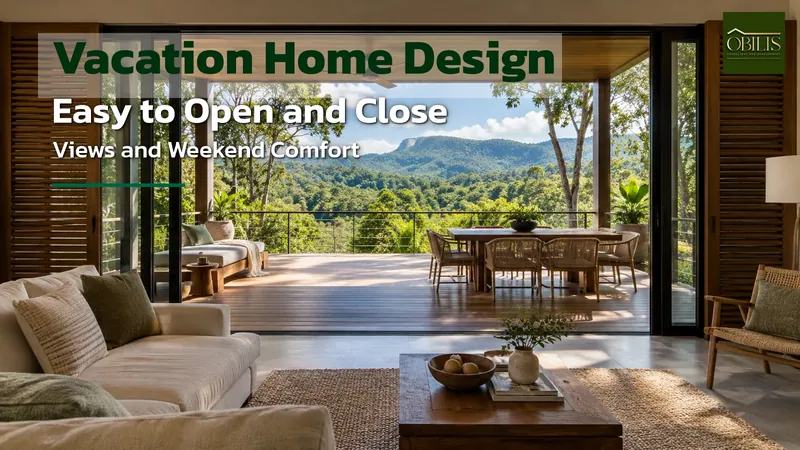
A covered veranda or deck keeps driving rain and direct glare off the main rooms while still opening the sightline to the garden or the hills beyond. It also gives a place to set down wet shoes or garden tools before anyone steps inside, and it lets people who just climbed out of the car rest their eyes on the view before unpacking.
This buffer zone also keeps the interior floors cleaner for longer, since dust and leaves get caught before they reach the main living space. Houses without this kind of pause point tend to get dirty fast, even after only a couple of days of use.
Let the House Breathe Even When No One Is Home
Houses left shut for a month tend to share the same problem: a musty smell and built-up damp the moment the door opens, especially in the Isaan region and around Khao Yai where humidity climbs late in the rainy season and into the cool months.
Placing openings so air can move on its own, such as windows on two opposite sides of a room, keeps the air turning over even with nobody home. That smell of a shut-up house then never gets the chance to build in the first place, so nobody spends the first afternoon airing the place out instead of relaxing.
Materials matter too. Wall-to-wall carpet or wallpaper in a room that traps moisture is usually the first place mold shows up, so finishes that dry out quickly get the house back to livable the moment the family walks in, with no lost time chasing a stale smell.
The Questions to Answer Before You Start Drawing Plans
Before hiring an architect, get clear on a few basics: how many times a year the family visits, how many nights each stay usually runs, and whether anyone in the household wants a bedroom that’s separate from the shared living areas. It also helps to check the chanote, the Thai land title deed, so the house orientation lines up correctly against the actual plot boundaries before anything gets drawn.
One question people often skip is who looks after the house while the owners are away. If a gardener or a caretaker checks in periodically, the layout should let them reach basic maintenance points, like watering the garden or checking the water pump, without needing to open up the entire house. It’s also worth noting here that foreign nationals generally cannot personally own land in Thailand, so ownership is usually structured through a long-term lease, a Thai spouse, or a properly set up Thai company, which is worth settling before the design work goes too far.
OBILIS often starts exactly from these questions before a single line gets drawn, because a vacation home that actually works comes from understanding how a family behaves, not from arranging rooms to look good on a floor plan.
If you want a rough figure for the house you have in mind, try the budget planner first, or contact us for advice based on your actual plan and land.
If your land has a mountain view, read more about resort-style house layouts that capture the view.
Frequently Asked Questions
How many bedrooms does a vacation home need?
The right number depends on how many people usually travel together and how often, so there’s no single figure that fits every house. What matters more is that each room can be shut off on its own when it’s not in use, so you’re not cooling or maintaining the whole house for just a couple of guests.
Which direction should the living room face?
North or northeast generally gives softer light and avoids the harshest afternoon sun. If you want a west-facing view of the mountains, always pair it with a deep eave or a shading screen so the room stays usable in the late afternoon.
Does someone need to look after the house all the time?
No, but the layout should let an outside caretaker, such as a gardener, reach basic upkeep points without opening the whole house. That keeps the property ready to use the moment the family arrives, even after weeks of sitting empty.
Key facts at a glance
| Direction to avoid for the living room | West |
|---|---|
| Recommended living room orientation | North or northeast |
| Where to place switches and locks | Grouped together near the entrance |
| Space needed between indoors and the garden | A covered semi-outdoor transition space |
| How to prevent musty smells in a closed house | Windows on opposite walls for natural cross-ventilation |
| Materials to avoid in damp-prone spots | Wall-to-wall carpet and wallpaper that trap moisture |
Frequently asked questions
How many bedrooms does a vacation home need?
It depends on how many people usually travel together and how often; each room should be able to shut off independently when it's not in use.
Which direction should the living room face?
North or northeast generally works best; a west-facing view needs a deep eave or shading screen to stay usable in the afternoon.
Does someone need to watch the house full time?
Not necessarily, but a caretaker should be able to reach basic upkeep points without opening the whole house.
Why does a closed-up house smell musty?
Because air stops moving and moisture builds up; openings on opposite walls let air circulate naturally even when no one is home.