House Orientation Thailand
Run the long sides of the house facing north and south and let the short ends take east and west, because west is the hottest side in Thailand, with low afternoon sun hitting walls and glass head-on. Put bedrooms and living rooms on the north or east, and use kitchens, bathrooms, stairs and the garage as a heat buffer on the west and south. Openings that catch southern wind and release it to the north keep the house cool with less air conditioning.
- West is the hottest side, south is next, and north gets the least direct sun most of the year
- Run the long walls north-south and keep the west side solid or reserved for rarely used space
- Bedrooms and living rooms go north or east; kitchens, bathrooms and garages buffer the west and south
- Isan hot-season wind comes from the south, so place inlet and outlet openings on opposite sides with the outlet slightly higher
How much does house orientation really affect heat?
Which way your house faces is a one-time decision that stays with the building for its entire life. You can repaint the walls and replace the air conditioners, but you cannot rotate the house. Two houses built from the same plans with the same materials, placed on different orientations, can differ by several degrees in afternoon room temperature, and that difference shows up on the electricity bill every single month.
Heat enters a house in three main ways: sun shining through glass, sun hitting solid walls and slowly conducting inside, and the roof soaking up sun all day long. Of these three, glass and walls are the parts that orientation controls directly. The roof receives sun from every direction regardless, so it has to be handled with insulation and ventilation under the roof instead.
Areas such as Korat (Nakhon Ratchasima) and Roi Et get strong sun almost all year, and outdoor temperatures above 38 degrees Celsius are normal in the hot season. A house placed the wrong way is something you feel from the first year, and it usually ends with adding more air conditioners or running them longer, a cost nobody puts in the construction budget.
Which sun is the hottest, and which way should the house face?
In Thailand, west is the hottest side. Afternoon sun comes in at a low angle and hits walls and windows head-on, at the point in the day when heat has already been building up for hours. South is the next hottest, especially late in the year when the sun tracks further south. East receives morning sun, which is still mild and gone before noon. North gets the least direct sun for most of the year.
The principle architects and engineers follow is straightforward: run the long sides of the house facing north and south, and let the short ends take the east and west. In simple terms, give the walls that get hammered by the sun the smallest possible surface area. Rooms that need daylight and where people spend long hours belong on the north side, while the west side should be solid wall or space that is rarely used.
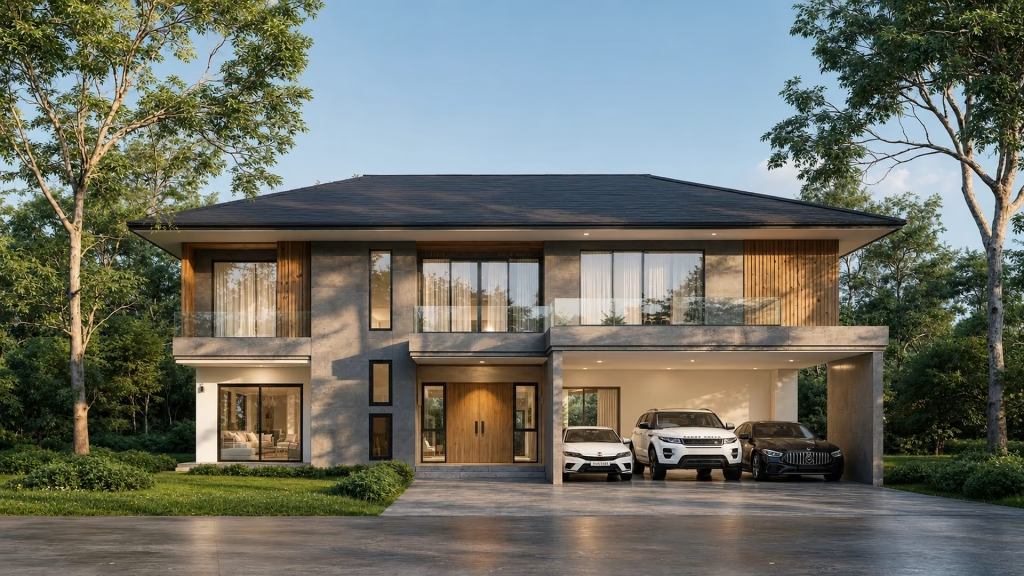
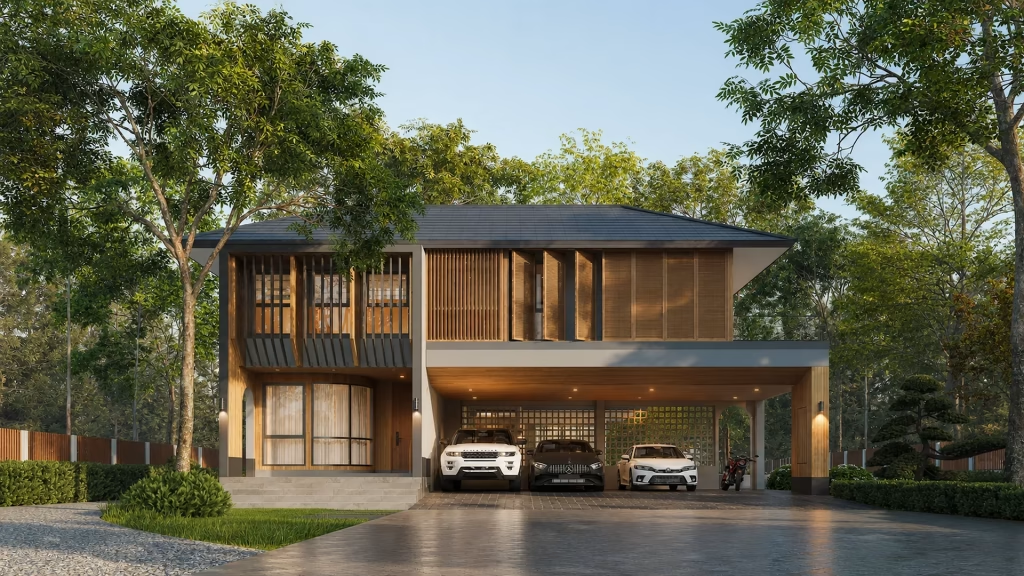
Which way the house “faces” and which way it takes the heat are not always the same thing. A front elevation with a large door and lots of windows should avoid the west, but if the road is on the west and the house has to face it, that still works. Extend the eaves, put a veranda or carport in front as a shield, and reduce the amount of glass on that side.
Where do Isan winds come from, and how do you place openings so air flows?
Prevailing winds in Isan (northeastern Thailand) come in two main seasons. From the hot season through the rainy season, wind arrives from the south and southwest. In the cool season it switches to the north and northeast. If the house has openings that catch wind from the south and a path for air to leave to the north, it gets a breeze almost year-round without relying on fans.
Air needs both an inlet and an outlet to move. A single window on one wall does almost nothing. What works in practice is placing windows opposite each other on different sides of a room or of the house, with the outlet slightly higher than the inlet, because warm air rises. Vents above doors and ventilation gaps under the roof do a good job of pushing hot air out.
What people usually forget is what surrounds the house. A tall solid fence, a neighbouring house, or a carport wall standing across the southern wind path turns well-designed openings into windows that simply let heat in. When laying out the plan, you have to look at the whole plot, not just the building.
Arranging rooms by orientation: what goes where
Bedrooms run the air conditioning longer than any other room, so they belong on the north or east side. A bedroom on the west stores heat in its walls all afternoon, and in the evening the air conditioner has to work hard for over an hour before the room cools down. This is why some houses feel warm even with the thermostat set to 25 degrees.
Kitchens, bathrooms, staircases, garages and storage rooms are spaces that do not need to be cool or where nobody stays long. This group is ideal on the west and south sides, acting as a heat buffer for the rest of the house. A Thai kitchen used for hot, high-heat cooking should also sit downwind so that smells and heat are not blown back into the house.
Living and dining rooms used from midday into the evening should get natural light from the north, which is soft light without heat, so you switch on fewer lights during the day and can look out at the garden without glare. If you plan an outdoor terrace or sitting area, the east side works well in the evening because the house itself shades it.
What if the plot forces a bad orientation?
Most plots do not give you a perfect orientation. A narrow, deep plot with the road on the west, or a plot where the best view is to the south, is common in housing developments around Korat and on hillside land around Pak Chong. In these cases you do not force the house to rotate; you solve it through design.
The main tools are eaves and shading screens. Southern sun comes from a high angle, so an eave projected to a calculated depth blocks most of it. Western sun comes in low, and eaves alone are not enough. You need vertical louvres, large trees, or a double-skin wall with an air gap in the middle. A double brick wall on the western side is a technique Isan builders have used for a long time, and it still works well.
The other approach is to choose materials by orientation. Walls that take the strongest sun use lightweight aerated concrete blocks or added insulation, glass on that side is tinted or reduced in size, while the north side can use large clear panes freely. Splitting the specification by orientation like this does not add much to the budget, because you only upgrade the sides that need it.
Orientation and electricity bills: how big is the long-term difference?
Most of the electricity bill for a house in Isan goes to air conditioning, and air conditioners work as hard as the heat stored in the house makes them. A house that is well oriented, has adequate eaves and catches the breeze switches the air conditioning on later and off earlier. Many homeowners report the same thing: a north-facing room and a west-facing room in the same house show a clear difference in electricity cost even with identical air-conditioning units.
The monthly difference may not look like much, but a house is lived in for twenty or thirty years. Small differences every month add up to roughly tens of thousands to a few hundred thousand baht over that time, depending on the size of the house and how it is used. The important point is that this saving comes free at the layout stage, without buying any extra equipment.
House orientation is therefore something to discuss before the drawings are made, not after a standard plan has been chosen and then dropped onto the land. The OBILIS team visits the actual plot to check sun direction, wind path and obstacles around the site before laying out the plan, so that the design genuinely suits that piece of land rather than looking good on paper and running hot in real life.
To get a rough budget before you talk to anyone, try our house price calculator, or contact the OBILIS team to talk through your plot.
Related reading: Single-Storey or Two-Storey House in Rural Thailand: Better Value? and Designing a Retirement Home for Your Parents in Thailand
Frequently Asked Questions
Is a north-facing house always best?
Not always. The key principle is to keep the long walls and the most-used rooms away from the west. Which way the front faces depends on the road and the shape of the plot. A house facing east or south can be perfectly comfortable if the rooms and eaves are arranged correctly.
If my plot faces west, do I need to buy a different one?
No. Solve it by placing the carport, a veranda or rarely used rooms at the front, reducing glass on that side, extending the eaves, and using louvres or trees to block afternoon sun. Many houses in Korat are built on plots like this and are comfortable to live in.
What if orientation conflicts with feng shui or traditional beliefs?
It can usually be reconciled. Beliefs mostly govern the direction of the front of the house or the main door, while heat management is about the long walls and the position of the bedrooms. An architect can arrange the plan to satisfy both if you state the conditions from the start.
ข้อมูลสำคัญโดยสรุป
| Hottest side | West (low afternoon sun), then south |
|---|---|
| Recommended layout | Long sides facing north and south, short ends east and west |
| Hot-season outdoor temperature | Above 38 degrees Celsius is normal in Korat and Roi Et |
| Isan prevailing wind | South and southwest from hot to rainy season; north and northeast in the cool season |
| West-facing bedroom | Air conditioner works hard for over 1 hour before the room cools in the evening |
| Long-term bill difference | Roughly tens of thousands to a few hundred thousand baht over 20 to 30 years |
คำถามที่พบบ่อย
Is a north-facing house always best?
Not always. The key principle is to keep the long walls and the most-used rooms away from the west. Which way the front faces depends on the road and the shape of the plot. A house facing east or south can be perfectly comfortable if the rooms and eaves are arranged correctly.
If my plot faces west, do I need to buy a different one?
No. Place the carport, a veranda or rarely used rooms at the front, reduce glass on that side, extend the eaves, and use vertical louvres, large trees or a double brick wall to block the low afternoon sun. Many houses in Korat are built on plots like this and are comfortable to live in.
Which side should the bedrooms be on to stay cool and save on air conditioning?
Bedrooms run the air conditioning longer than any other room, so they belong on the north or east side. A west-facing bedroom stores heat in its walls all afternoon, and in the evening the air conditioner has to work hard for over an hour before the room cools, which is why some houses still feel warm at 25 degrees.
What if orientation conflicts with feng shui or traditional beliefs?
It can usually be reconciled. Beliefs mostly govern the direction of the front of the house or the main door, while heat management is about the long walls and the position of the bedrooms. An architect can arrange the plan to satisfy both if you state the conditions from the start.