Building a House in Wang Nam Khiao: how does it differ from Khao Yai and Pak Chong?
Building a house in Wang Nam Khiao differs from Khao Yai mainly in access, with plots sitting further from the main road, less complete electrical and water coverage in some areas, and higher material transport costs. Land is generally cheaper than Pak Chong, though no central source publishes a clean comparative figure, so check utilities and title documents before buying.
- Land in Wang Nam Khiao sits further from the main road than Pak Chong
- Prices per rai are generally lower, but no central comparative figure exists
- Some plots sit outside PEA and regional waterworks service areas
- Budget extra for access roads and long-distance material transport
Building a House in Wang Nam Khiao: What Really Differs from Khao Yai and Pak Chong
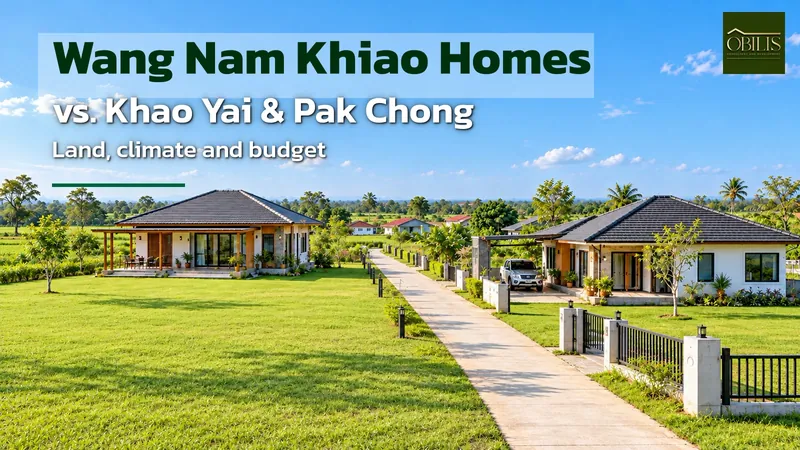
Building a house in Wang Nam Khiao versus building one in Khao Yai or Pak Chong might sound similar, since all three sit along the same mountain range. In practice, though, there are real differences in land, climate, and the budget you need to prepare.
Wang Nam Khiao sits further off the main Mittraphap Road than Pak Chong does, so some plots can only be reached via narrower secondary roads. That affects both the delivery of construction materials and everyday access to and from the house.
Anyone comparing a vacation home in Wang Nam Khiao against one in Khao Yai or Pak Chong should understand these differences before choosing land, since each area suits different uses and different budgets.
Land in Wang Nam Khiao: Price and Terrain
Most land in Wang Nam Khiao sits on hills and sloped terrain, much like Khao Yai, but many plots are further from main routes. That generally makes the price per rai (a Thai land unit, roughly 1,600 square meters) lower overall than plots fronting the main road in Pak Chong — though no central source has published a clean, directly comparable figure between the two areas.
Sloped land in Wang Nam Khiao needs the same checks for retaining walls and water drainage direction as sloped land in Khao Yai, since the same type of terrain carries a similar landslide risk. This isn’t an issue unique to either area.
Before buying, check the area’s town plan and the land title documents carefully. Some plots in Wang Nam Khiao still carry a land right document other than a full chanote (the title deed, Thailand’s strongest form of land ownership), which affects building permit applications later. It’s also worth noting that foreigners generally cannot own land outright in Thailand, so it’s worth consulting a local lawyer about leasehold or other legal structures before buying.
Climate and Environment to Consider Before Building in Wang Nam Khiao
Wang Nam Khiao is known for cool air and thick morning fog, similar to Khao Yai, but some spots deep in the valleys can hold more humidity. Houses built in those areas need extra attention to ventilation and moisture protection.
The large trees and natural forest around many plots in Wang Nam Khiao are still denser than in the more developed Pak Chong. The upside is shade and an unspoiled natural view; the downside is more fallen leaves and branches to deal with, especially if the house has a pool or rain gutters.
Year-round high humidity also affects material choices. Houses in Wang Nam Khiao should use more durable moisture- and termite-resistant materials than houses in the city, to reduce problems down the road.
Budget for Building in Wang Nam Khiao vs Khao Yai
Construction cost per square meter in Wang Nam Khiao isn’t much different from Khao Yai or Pak Chong, since contractors and crews tend to come from the same surrounding area. The main difference usually comes from higher material transport costs and harder access on some plots.
Sloped or remote land often adds extra cost for building an access road and retaining walls — a line item often forgotten during initial planning. This isn’t unique to Wang Nam Khiao; it’s simply the cost of any mountain land with similar terrain.
Set aside extra budget for electrical and water system work, since some plots in Wang Nam Khiao still sit outside the main service area of the PEA (Provincial Electricity Authority) and the regional waterworks authority, which means requesting a service extension before construction can actually begin.
Utilities and Travel: Factors Often Overlooked
The distance from Wang Nam Khiao into Pak Chong town or Khao Yai is greater than traveling within Khao Yai itself. Owners who won’t live there full-time should factor this in when choosing land, since it affects how often they can visit and how easy it is to call in a technician for repairs.
Phone and internet coverage in some parts of Wang Nam Khiao is still less complete than in Pak Chong, which matters if you plan to install CCTV or a remote alert system for a house that sits empty most of the time. Check the actual signal on site before deciding to buy.
Requesting an electrical or water service extension for land in a remote area usually takes longer and costs more than for land that already fronts a main road. Check with the local PEA office and the regional waterworks authority before buying, so this part of the budget is fully accounted for.
Choosing a Building Team That Understands Wang Nam Khiao
A team with real, hands-on experience in Wang Nam Khiao knows which plots are hard to access, which need extra road-building budget, and which sit outside the electrical and water service area. That lets owners budget far more accurately than by comparing directly to city house prices.
Ask any contractor directly whether they’ve worked in this kind of area before, and have them itemize the area-specific costs — such as material transport and road-building — separately from the house construction cost, starting from the quotation stage.
OBILIS has experience building vacation homes in Khao Yai, Pak Chong, and Wang Nam Khiao, which helps in assessing budgets and planning utility systems suited to each plot’s characteristics from the very first step, whether the land sits near a main road or deep in a valley.
To get a rough idea of your budget, try the house budget planner, or contact the team to discuss the details.
Related reading: Pak Chong Zoning: Which Land Zones Allow Building Before You Buy Near Khao Yai
Frequently Asked Questions
Is building a house in Wang Nam Khiao very different from building in Khao Yai?
Not very different in construction technique, since both are similar mountain terrain. The main differences lie in the distance needed to reach the land, how complete the utility coverage is, and material transport costs, which tend to run higher the further a plot sits from the main road.
Is land in Wang Nam Khiao really cheaper than in Khao Yai or Pak Chong?
Overall, land in Wang Nam Khiao tends to be priced lower per rai than plots fronting the main road in Pak Chong, but there’s no clear comparative figure published by any central source. The actual price depends more on each plot’s location and road access than on any single number.
What extra budget should I set aside for building a house in Wang Nam Khiao?
Set aside budget for an access road, long-distance material transport, and an electrical or water service extension if the land sits outside the service area. These are common costs in remote mountain areas, more so than for land that already fronts the main road in Pak Chong or Khao Yai.
Key facts at a glance
| Location | Wang Nam Khiao sits further from Mittraphap Road than Pak Chong |
|---|---|
| Land price | Generally lower than Pak Chong, but no central comparative figure exists |
| Terrain | Hills and slopes, with landslide risk similar to Khao Yai |
| Utilities | Some plots sit outside PEA and regional waterworks service areas |
| Extra budget | Access roads, retaining walls, and long-distance material transport |
| Land title | Some plots carry a land right document other than a full chanote |
Frequently asked questions
Is building a house in Wang Nam Khiao very different from Khao Yai?
Not very different in construction technique, since both areas share similar mountain terrain. The main differences are access distance, utility coverage, and material transport costs, which run higher the further a plot sits from the main road.
Is land in Wang Nam Khiao cheaper than in Khao Yai or Pak Chong?
Land in Wang Nam Khiao tends to be priced lower per rai than plots fronting the main road in Pak Chong, but there's no clear comparative figure from any central source. Price depends more on location and road access.
What extra budget should I plan for building in Wang Nam Khiao?
Budget for an access road, long-distance material transport, and an electrical or water service extension if the land sits outside the service area — common costs in remote mountain areas.
What kind of building team should I choose for land in Wang Nam Khiao?
Choose a team with real experience in similar mountain terrain, since they'll know which plots are hard to access, need extra road budget, or sit outside the electrical and water service area.