
Vacation Home in Khao Yai
A vacation home in Khao Yai needs a maintenance plan set up in advance since no one lives there full-time. Turn off unnecessary breakers and water valves before leaving, check your electricity bill through the PEA Smart Plus app, leave small ventilation gaps to prevent mould, and install CCTV at the main entrance while asking a local caretaker or neighbour to watch for anything unusual.
- Turn off unnecessary breakers and water valves before leaving every time.
- Use the PEA Smart Plus app to catch unusual electricity bills remotely.
- Leave ventilation gaps open to reduce moisture and prevent mould.
- Install CCTV at the main entrance and test internet signal before relying on it.
How Maintaining a Khao Yai Vacation Home Differs From a Full-Time House
Maintaining a vacation home in Khao Yai isn’t like maintaining a house someone lives in every day, because many problems go unnoticed from the moment they start. By the time the owner comes back, the problem may have already spread — a small pipe leak, for instance, can turn into mould covering an entire wall. Damage that starts this small tends to keep growing the longer the house sits closed with no one noticing.
The air in Khao Yai and Pak Chong is noticeably cooler and damper than the flat plains of Korat, especially in the late-rainy, early-cool season when morning fog lingers for days at a stretch. This kind of accumulated moisture is the main enemy of a house left closed for weeks. Temperature swings between day and night at higher elevation also cause condensation on walls and windows more easily than in lowland houses.
Most vacation homes also don’t have anyone watching them around the clock the way a city house might. Setting up a maintenance system in advance matters far more here than for a full-time home, because once a real problem occurs, noticing it and fixing it in time can take much longer than expected. Many owners only realise this after their first serious problem.
Electrical and Water Systems to Check Every Time You Close Up
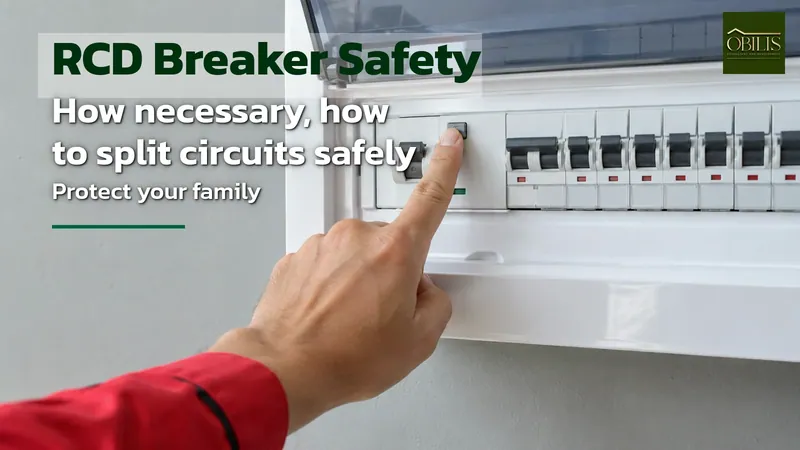
Before leaving every time, switch off breakers for circuits you don’t need, keeping only what must stay on, such as the fridge or water pump, to reduce the risk of a short circuit while no one’s home.
Don’t ignore your electricity bill either, since an unusually high bill is often the first sign of a leak or a malfunctioning appliance. The Provincial Electricity Authority (PEA) offers the PEA Smart Plus app to check usage history remotely from anywhere (according to PEA). Setting a weekly reminder to check the app helps catch anomalies faster than waiting for a monthly paper bill.
Shut off the main water valve too if the house won’t be used for more than a week, since pipes under constant pressure are more likely to leak at small joints than pipes with the valve closed. If the power goes out suddenly, PEA’s 24-hour hotline at 1129 can be called anytime (according to PEA).
Moisture and Mould in a Mountain-Area Vacation Home
A house closed up for weeks often smells musty the moment the door opens — a sign that indoor humidity has risen past the point where mould starts growing, especially in corners sunlight never reaches. Closets and storage rooms with poor airflow are usually the first spots to give off that musty smell.
The fix is to leave small ventilation gaps open at all times rather than sealing the house completely, and to choose moisture-resistant wall materials or paint suited to a cool climate from the construction stage, rather than fixing it later. A low-power dehumidifier placed in the dampest corner also helps even without anyone there continuously.
Solid wood furniture and curtains are the most mould-prone items since they absorb moisture quickly. If the house will be closed for over a month approximately, ask someone local to drop by periodically to open windows and air the place out instead of leaving it sealed indefinitely.
A Year-Round Approach to Maintaining a Khao Yai Vacation Home
An approach to maintaining a Khao Yai vacation home that actually works splits inspections into two types: a quick check for basic security whenever someone passes by the area, and a thorough check the owner or a caretaker must do in person. Using the same checklist every time helps avoid missing anything important, even when different people do the inspection each round.
During the rainy season, focus on checking the roof and gutters especially, since heavy sustained rain in mountain areas often reveals small leaks that stayed invisible during the dry season. In the cool season, focus on checking window and door weather seals, since rapid temperature shifts make materials expand and contract, wearing out seals faster than in the lowlands. Photographing past leak spots every year for comparison also makes it easier to see how a problem has changed than relying on memory alone.
The garden and surrounding grounds need to stay on the same inspection schedule, since overgrown branches draping across power lines or the eaves is a common cause of damage in unoccupied vacation homes. Overgrown grass is also more likely to attract venomous animals than a regularly trimmed lawn.
Security and Remote Monitoring
Internet-connected CCTV cameras let owners see movement around the house in real time from their phone, but installation points should cover the main entrance and any spots not clearly visible from the road, which tend to be higher-risk. A camera with motion-triggered alerts also saves time compared with scrolling through all the recorded footage yourself.
Internet signal in some parts of Khao Yai and Pak Chong isn’t as stable as in town, so test the actual signal at the location before installing a monitoring system that depends entirely on the internet, or it may fail exactly when you need it most. Some homes back this up with local on-device recording in case the internet connection drops temporarily.
Asking neighbours or a local caretaker to watch for anything unusual is still one of the most effective methods, no matter how advanced the technology gets, because people living nearby often notice small changes faster than a camera in certain situations.
Designing a House That’s Easy to Maintain From the Start
An easy-to-maintain house starts at the design stage, not just by finding a caretaker afterward — for example, choosing roofing material with high moisture resistance, laying out plumbing so it’s easy to inspect and shut off, or designing ventilation so the house doesn’t need to be left open constantly. Details like these are easy to overlook when choosing a beautiful design, but they affect long-term upkeep costs more than most people expect.
The OBILIS team often advises vacation-home owners to think about long-term upkeep from the design stage, not decide on looks alone, because a house far from a full-time residence has to fend for itself more than an ordinary home. Choosing easy-to-maintain materials from the start is usually more cost-effective than saving money during construction and having to repair things often later.
If you want a rough figure for the house you have in mind, try the budget planner first, or contact us for advice based on your actual plan and land.
Telling your designer from the start that this house won’t have full-time residents helps choose the right materials and systems from day one, instead of needing extra fixes later that usually cost more than planning ahead.
If you’re thinking of renting the house out while you’re away, read more about building a pool villa for rent in Khao Yai.
Frequently Asked Questions
How often should I check on a Khao Yai vacation home?
There’s no fixed frequency that suits every house, but generally someone should inspect it at least once a month approximately, more often during the rainy season when leak risk is higher. This figure isn’t set by any government body — it depends on the actual condition of the house and location.
Will leaving a vacation home unused for a long time cause serious damage?
The main risk is accumulated moisture and small problems that go unnoticed early on, not the house collapsing outright. With remote monitoring in place and someone dropping by periodically, damage from a long closure can be reduced significantly.
Do I need CCTV covering every corner of a vacation home?
Not every corner — focus on the main entrance and risk spots not visible from the road. Test the internet signal at the actual location before installing, since some areas of Khao Yai and Pak Chong still have unstable connectivity.
Key facts at a glance
| Bill-checking app | PEA Smart Plus, from Thailand's Provincial Electricity Authority |
|---|---|
| Power outage hotline | 1129, available 24 hours (PEA) |
| Main risk | Accumulated moisture and mould when closed up long-term |
| Camera placement | Main entrance and spots not visible from the road |
| Approximate inspection frequency | At least monthly; no government-set standard |
| Risk seasons | Rainy season for leaks, cool season for door/window seals |
Frequently asked questions
How often should I check on a Khao Yai vacation home?
There's no fixed frequency, but generally at least once a month approximately, more often during the rainy season.
Will leaving a vacation home unused for a long time cause serious damage?
The main risk is accumulated moisture and small unnoticed problems, not the house collapsing outright.
Do I need CCTV covering every corner?
No, focus on the main entrance and spots not visible from the road.
How can I check my electricity bill remotely?
Through PEA's Smart Plus app, which shows usage history from anywhere.