
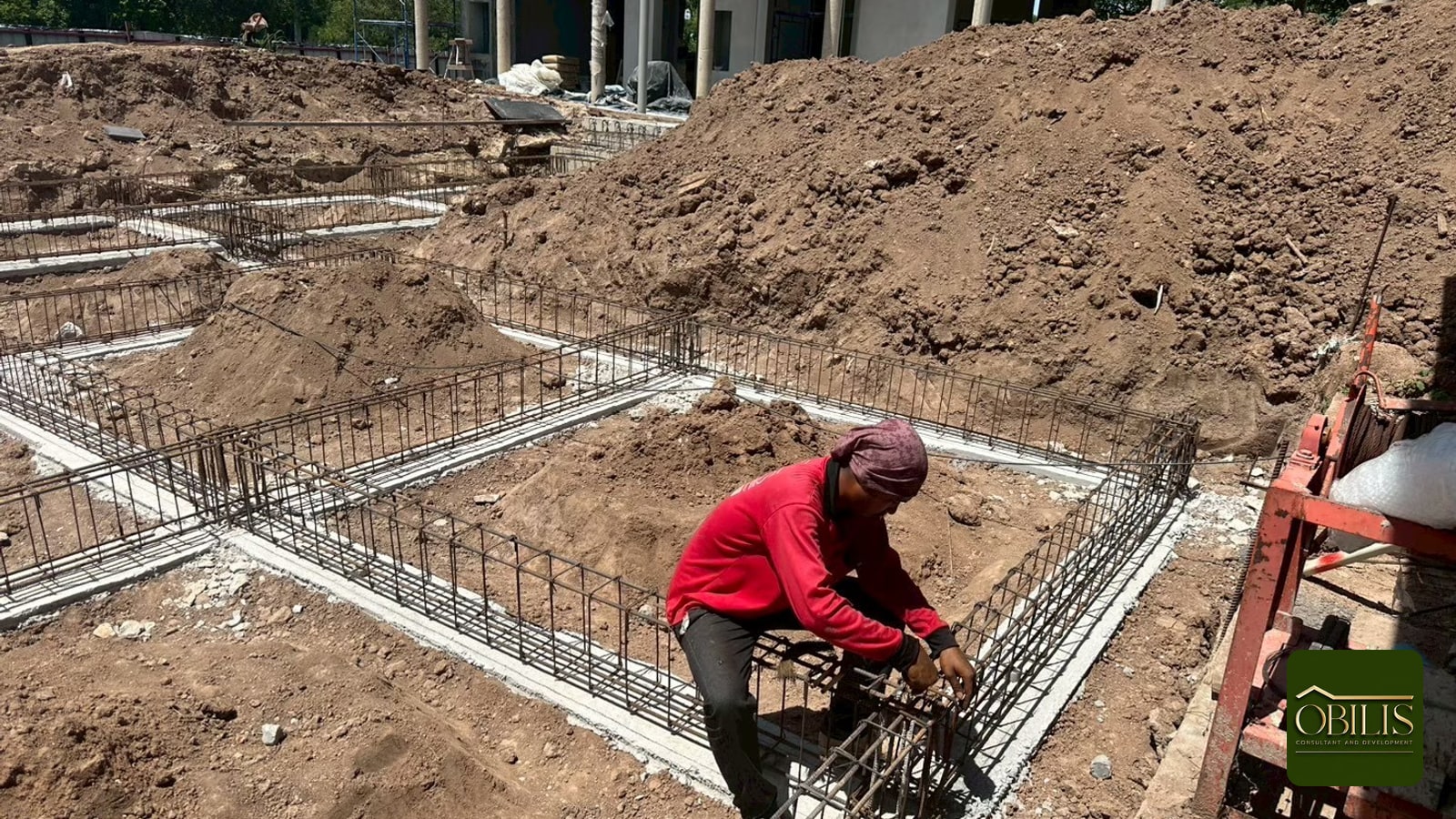
termite protection before the slab in a Thailand build
Pre-slab termite treatment takes less than a day, yet it is the one defence you can put in place only once: after the concrete goes down, the soil beneath it is permanently unreachable. Two methods are used on house builds, spraying termiticide across the soil the slab will cover, and casting perforated reticulation pipes into the slab with injection points on the outside walls. Treat after compaction, before the sand blinding and membrane.
- The treated soil layer can only be laid once, before the slab goes down.
- Spray treatment plus a cast-in reticulation system works best in combination.
- Treat after compaction but before the sand blinding and damp-proof membrane.
- Collect the active ingredient, dated site photos and the operator licence as evidence.
Why Treating Before the Pour Beats Fixing It Later, Several Times Over
Pre-slab termite treatment takes less than a day and costs a fraction of the build, yet it is the one defence you can put in place only once in the life of the house. The moment the concrete slab goes down, the soil beneath it becomes permanently unreachable and stays that way for as long as the building stands.
The subterranean termites common across Isan do not fly in through the windows. They travel up from the soil through cracks in the slab, through the joint between slab and ground beam, and through the gaps around pipes that pass up through the floor. A few millimetres of opening is all they need. Injecting treatment into the soil before the pour builds a barrier directly between the colony and the house.
Retrofitting means drilling the finished floor at intervals and injecting through it, which means drilling through tiles you have just paid to lay, and repeating the perimeter treatment every one to three years. Over several years the accumulated cost usually runs to several times the price of the pre-pour job, and the protection is never as continuous as a barrier laid down from the start.
The Two Methods Actually Used on House Builds
The first is spraying or flooding the soil with termiticide before the slab is poured, generally known on site as under-slab treatment. The chemical is applied across the whole area the slab will cover, plus around the footing pits, along the line of the ground beams and against any retaining walls, producing a treated layer that termites will not cross.
The second is a reticulation system cast into the slab: small perforated pipes laid before the concrete goes down, with injection points brought out on the outside walls. When a top-up is due, the technician simply connects a hose to the injection point and recharges the system, without drilling the floor or lifting a single tile.
The two are not rivals, and used together they work best: the spray gives you a barrier from day one, while the pipework gives you a way to recharge it in the years that follow. Combined, for a mid-sized house at 2026 market rates, the cost typically falls somewhere in the low tens of thousands of baht depending on floor area and provider, so it is worth comparing more than one quotation.
Termite Mesh and Physical Barriers: The Chemical-Free Alternatives
Alongside chemicals there are physical barriers. The most widely used is a finely woven stainless steel mesh with apertures too small for a termite to pass through. It is laid over vulnerable areas or wrapped around the pipes that penetrate the slab, which are the routes termites exploit most often of all.
The other option is a film or sheet with a termiticide bound into the material itself, laid under the whole slab before the pour. It never needs recharging and puts no chemical into the surrounding soil. The drawbacks are a higher price and a performance that depends entirely on how neatly the laps are made, because a single break in the sheet is effectively an open door.
In practice most ordinary houses in Korat or Roi Et still rely on chemical treatment combined with a reticulation system, with stainless mesh added at the pipe penetrations. That combination performs well within a realistic budget. Full-sheet termite barriers tend to appear on houses whose owners want no chemicals used at all.
Where Pre-Slab Treatment Falls in the Construction Sequence
The right moment is after the fill has been placed and compacted to the design level, but before the sand blinding goes down and before the polythene damp-proof membrane is laid. Spray after the membrane is in place and the chemical simply sits on top of the plastic and never reaches the soil at all, which is money thrown away.
Avoid days when it is raining or the ground is still saturated from overnight rain, which is a real scheduling issue for anyone building through the Isan wet season, because the chemical washes away and the barrier ends up patchy. A competent crew will ask to postpone. If a contractor pushes to treat while the ground is still wet, accept the delay and pour the slab a day or two later instead.
Pour the slab reasonably soon after treatment, generally within one to two days. If it sits for a week with people walking and carrying materials across the soil, or with trenches reopened for extra pipework, the treated layer ends up broken in places. When that happens the crew has to come back and re-treat the disturbed areas, not wave it through on the grounds that it was sprayed once already.
The Evidence to Ask For and the Warranty Terms to Read to the End
Once the slab is down this work cannot be verified after the fact, so the owner has to collect evidence while it is actually happening. At minimum you should be given the name and chemical class of the active ingredient, a neonicotinoid or a synthetic pyrethroid for example, along with the mixed concentration and the litres applied per square metre.
Ask for date-stamped site photographs: the chemical being mixed in the tank, the spray going across the area, and the treatment around the footing pits, together with a work record sheet signed by the operator. Most importantly, ask to see the licence of the person supervising the use of hazardous substances and the registration number of the product used. A provider doing the job properly has this paperwork ready without being asked twice.
On warranties, three to five years with an annual inspection is common for under-slab treatment. Some providers offer up to ten years where a reticulation system is installed and a continuing top-up contract is maintained. What usually voids cover is extending the slab afterwards, drilling the floor yourself, excavating around the house deep enough to cut the treated layer, and missing the scheduled service visits. Read those clauses to the end before you sign anything.
Design Details That Invite Termites In, and What to Do If You Find Them
Plenty of houses are properly treated and then designed with a convenient route straight in. The classic examples are timber in direct contact with soil, such as screen posts, the piers of a garden pavilion or hardwood edging set into the ground, along with offcuts of formwork left under the house or buried in the fill, which amount to food waiting quietly beneath the floor.
The next risk is a planter built hard against the house wall, because damp soil then touches the wall above the level of the barrier and termites can climb without ever crossing the treated layer. The same applies to a bathroom that leaks chronically and keeps the floor damp, and to the gaps around waste pipes through the slab, which should be sealed and fitted with mesh during construction rather than afterwards.
If you find mud tubes running along a wall or column after you have moved in, do not knock them down yourself, because the colony simply relocates and opens a new route you will not find. Photograph them and call the provider who holds the warranty, exactly as the contract provides. OBILIS teams usually advise clients to keep the treatment records and the warranty number in the same folder as the house drawings, because by the time they are needed in year three or four, most people can no longer find them.
To get a rough budget before you talk to anyone, try our house price calculator, or contact the OBILIS team to talk through your plot.
Related reading: Construction Warranty in Thailand: How Long and What It Covers
Frequently Asked Questions
The slab is already poured and nothing was treated. What now?
You still have options. The floor is drilled at intervals along the wall lines and treatment injected through it, combined with a treated trench around the perimeter. It works reasonably well but is never as continuous as pre-pour treatment, and it has to be topped up on schedule to stay effective.
How long does under-slab treatment last?
It depends on the chemical class, the soil and the moisture. Three to five years is typical. Free-draining sandy soil degrades it faster than clay does, which is why it pays to install the reticulation pipework from the start so that recharging never means drilling the floor.
We have small children and pets. Is it safe?
The chemical is applied into the soil and then sealed under the concrete slab, so occupants have no contact with it under normal conditions. Use a licensed provider and a properly registered product, and keep everyone off the area on the day the treatment is carried out.
ข้อมูลสำคัญโดยสรุป
| Combined cost, mid-sized house | low tens of thousands of baht, 2026 market rates |
|---|---|
| Under-slab treatment life | typically 3 to 5 years |
| Common warranty | 3 to 5 years with an annual inspection |
| Warranty with reticulation system | up to 10 years |
| Pour the slab after treatment | generally within 1 to 2 days |
| Retrofit perimeter re-treatment | every 1 to 3 years |
คำถามที่พบบ่อย
The slab is already poured and nothing was treated. What now?
You still have options. The floor is drilled at intervals along the wall lines and treatment injected through it, combined with a treated trench around the perimeter. It works reasonably well but is never as continuous as pre-pour treatment, and it has to be topped up on schedule to stay effective.
How long does under-slab treatment last?
It depends on the chemical class, the soil and the moisture. Three to five years is typical. Free-draining sandy soil degrades it faster than clay does, which is why it pays to install the reticulation pipework from the start so that recharging never means drilling the floor.
We have small children and pets. Is it safe?
The chemical is applied into the soil and then sealed under the concrete slab, so occupants have no contact with it under normal conditions. Use a licensed provider and a properly registered product, and keep everyone off the area on the day the treatment is carried out.
What evidence should I ask the provider for?
At minimum, the name and chemical class of the active ingredient, the mixed concentration and the litres applied per square metre. Ask for date-stamped site photographs of the mixing, the spraying and the treatment around the footing pits, plus a work record sheet signed by the operator. Also ask to see the hazardous-substance supervisor licence and the product registration number.