Hidden Costs Building House
The house price a builder quotes normally covers only the house itself, from ground beam to roof, plus piles as specified. The hidden costs sit outside the house: land fill and compaction, retaining walls, fence and gate, driveway and parking, utility connections, water tank and pump, plus air conditioners and built-ins. Budget roughly 10 to 20 percent of the house price for external works and systems, and another 5 to 10 percent for fit-out.
- The per-square-metre house price excludes land fill, fence, driveway and utility connections
- External works and systems usually run 10 to 20 percent of the house price, fit-out another 5 to 10 percent
- Survey the land before fixing the house budget, and get the exclusions list in writing
- Keep a reserve for poor soil, power line extension or mid-build material changes
What the House Price You Were Quoted Actually Covers
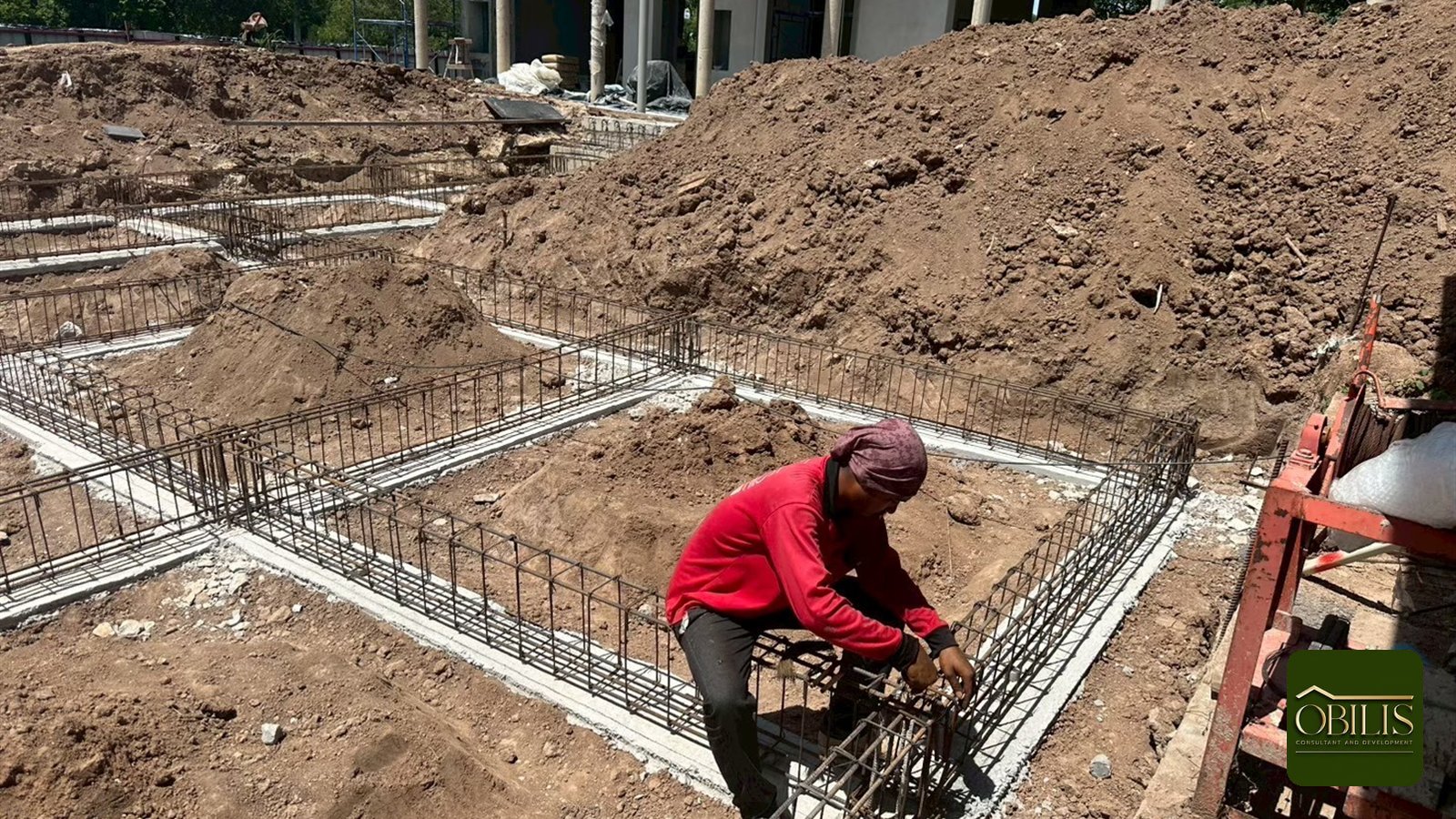
The hidden costs of building a house in Thailand are rarely hidden inside the house itself. They sit around it. The price a home-building company or contractor quotes generally covers the house from the ground beam up to the roof, including the piles specified in the drawings, but not the external works that make the house genuinely liveable.
External works are left out of the house price not because anyone is hiding them, but because they depend so heavily on the individual plot that no standard price is possible. A plot on a concrete road and a plot that needs its own hundred-metre access track cost wildly different amounts, even for exactly the same house.
The trouble starts when an owner multiplies the price per square metre by the floor area and treats that as the whole budget. When the house is finished they discover there is no fence, no road and no water, and the money has run out. Plenty of houses in Korat and Roi Et sit completed but uninhabitable for months for exactly this reason.
Land Filling and Compaction: The First Hidden Cost, Before Any Piles
Much of the land in Isan was once paddy or low-lying ground that sits below the level of the road in front. Before building, it has to be filled to comfortably above road level to keep out floodwater and standing water. The cost depends on how high you need to fill, the distance from the borrow pit and the price of fill at the time. The same plot filled in the rainy season and in the dry season will already cost different amounts.
What people forget even more often than the fill itself is the cost of compaction and the time the ground needs to settle. Freshly placed fill that has not been compacted keeps subsiding for a long time, dragging down the paving around the house, the parking slab and the drainage pipes later on. Skimping here almost always comes back as a repair bill.
Sloping hillside plots around Khao Yai and Pak Chong carry a different hidden cost: retaining walls. The scenic plots with a view usually need retaining walls or terraced levels, which is engineered structural work, and on some plots the cost rivals the entire foundation of the house.
Fence and Gate: A Bigger Hidden Cost Than You Think
The fence is a larger hidden cost than almost everyone expects, because people picture it as a small item. But fencing is priced by the metre around the boundary, and a one-rai plot (1,600 square metres) can have a perimeter of well over a hundred metres. Precast concrete panels and a rendered brick wall on proper footings differ enormously in price per metre, and a fence along a public road is also subject to local rules on height and setback.
The gate is another line where the budget balloons quickly. A plain steel sliding gate and an automatic gate with motor and remote are several times apart in price, and a large gate needs posts and footings strong enough to carry its weight, which should be built together with the fence foundations rather than drilled in afterwards.
Before fencing, have the land surveyed or the boundary markers verified, especially for land bought from relatives or subdivided from a larger rice field. The survey fee and the wait for a Land Office officer are both money and time that belong in the plan. Building a fence over the line and having to demolish it is the double cost nobody wants.
Driveway, Parking Slab and Connecting Power and Water to the House
Land that does not front a public road directly needs its own access. A compacted laterite track is fine during construction, but once you live there the rainy season turns it to mud. A concrete road wide enough for a car is priced by length, so a plot set tens of metres back from the main road carries a large hidden cost here.
The parking slab and the paths around the house are also outside the house price. Even where the drawings show a carport roof, the concrete slab beneath it, kerbs and the drainage channel around the house are usually separate items. Read the BOQ (bill of quantities) carefully to see exactly where the line between the house and the external works is drawn.
Connecting electricity and water from the meter to the house is another item that frequently vanishes from quotations. The permanent meter application, pole extension charges if the land is far from the line, and the pipe run from the water meter at the road to the house are all costs the owner pays. The deeper the plot, the higher the figure.
Water Systems, Septic Tank, Pump, Air Conditioning and the Things That Make a House Liveable
Most houses outside town need a storage tank and a pump, because village water pressure is too low or supply is irregular. If no main passes the plot at all, you need a borehole with a filtration system. Some builders include all of this in the price, others do not, so ask clearly while comparing quotes.
The septic and soak-away tanks are usually inside the house price, but the size supplied may be the smallest standard unit. If the household is large or the soil drains poorly, you will need a larger tank or a packaged treatment tank, which is an extra. The same goes for rain gutters and the drainage around the house, which some designs simply do not include.
The interior items forgotten most often are air conditioning, built-in furniture, curtains, insect screens and window bars. A typical house price stops at paint and sanitaryware. Only on moving in do owners realise that three bedrooms need three air conditioners, the kitchen has no cabinets and the windows are bare. Added up, this is a sum no smaller than the external works.
How to Budget External Works So the House Is Finished and So Is the Money
The method that works in practice is to split the budget into three pots from the start. The first is the house as quoted. The second is external works and systems. The third is fit-out and contents. From site experience in Korat and Roi Et, external works and systems usually land at roughly ten to twenty percent of the house price, with fit-out adding roughly another five to ten percent. The real figures vary with the condition of the land and the grade of materials chosen.
A plot that needs deep fill, a long access road or a retaining wall can push the external share far higher, so have someone survey the land before setting the house budget, not the other way round. Very often, trimming the house slightly to afford complete external works produces a more comfortable home than a bigger house with no fence and no road.
When comparing quotations from several builders, ask each for a written list of what is excluded and set them side by side. The lowest price is usually the one that has stripped out the most external work. The OBILIS team surveys the plot and lists every external item in the budget plan at the design stage, so the owner sees the total before deciding rather than discovering it piece by piece along the way.
To get a rough budget before you talk to anyone, try our house price calculator, or contact the OBILIS team to talk through your plot.
Finally, keep a separate contingency for the unknowns, such as poor soil, a power-line extension, or a change of heart on materials midway. Contingency is not money you intend to spend, but money that keeps the build moving without stopping work to raise more.
Related reading: Construction Loan on Your Own Land in Thailand: What Banks Check, Temporary Electricity and Water for Construction in Thailand and Single-Storey or Two-Storey House in Rural Thailand: Better Value?
Frequently Asked Questions
What percentage of the house price should I budget for external works?
Roughly ten to twenty percent of the house price for land in normal condition, but plots that need deep fill, a long driveway or a retaining wall can run higher. Survey the land before fixing the number.
Does a builder’s price per square metre include land filling and the fence?
Usually not. A house price normally covers the house from the ground beam to the roof plus the piles in the drawings. Filling, fencing, the driveway and utility connections are typically separate items, so always ask for the exclusions in writing.
Should the fence be built before or after the house?
Mostly after the main structure is complete, because delivery trucks and machinery need room to get in and out. Where possible, though, build the fence footings and gate posts at the same time as the house foundations, and always verify the boundary markers before any work starts.
ข้อมูลสำคัญโดยสรุป
| External works and systems | About 10 to 20 percent of the house price |
|---|---|
| Fit-out: AC, built-ins, curtains | About 5 to 10 percent of the house price |
| What the quote covers | The house from ground beam to roof, with piles as drawn |
| Fence on a 1 rai plot | Perimeter can exceed 100 metres; priced per metre |
| Usually excluded | Land fill, retaining wall, fence, driveway, parking, utility connections, tank, pump |
| Before fencing | Survey or verify the boundary markers first |
คำถามที่พบบ่อย
What percentage of the house price should I budget for external works?
Roughly 10 to 20 percent of the house price for a plot in normal condition, plus about 5 to 10 percent for fit-out such as air conditioners, built-ins, curtains and insect screens. Land that needs deep fill, a long access road or a retaining wall can push that much higher, so survey the land before setting the figure.
Does the per-square-metre house price include land fill and the fence?
Usually not. A house price normally covers the house from ground beam to roof with piles as drawn. Land fill, fence, driveway and utility connections are usually separate items, so always ask for the list of exclusions in writing when comparing quotes.
Should the fence be built before or after the house?
Mostly after the main structure is finished, because delivery trucks and machinery need room to get in and out. But the fence footings and gate posts should ideally be done together with the house foundations, and the boundary markers should be surveyed before any work starts.
Why must fill soil be compacted and left to settle before building?
Fresh fill that is not compacted keeps sinking for a long time, so the surrounding floors, parking area and drain pipes settle later. Saving here almost always comes back as a repair bill. Much land in Isan used to be paddy or low ground, so it must be raised well above the road to prevent flooding.