
Contractor Building Company
An independent contractor and a home building company differ in who is responsible, not in the skill of the crews. A contractor quotes roughly 10 to 20 percent less, communicates directly and decides fast, but usually has no engineer, no site supervisor and only a verbal warranty. A company bundles design, permits, supervision and a written warranty backed by a legal entity, which suits owners living far away, building two storeys or taking a bank loan.
- The difference is who is accountable for what, not the tradesmen, since site crews often work for both
- Contractor quotes are roughly 10 to 20 percent lower, but compare on the same scope of work
- A company brings engineering drawings, a site supervisor, a standard contract and a written warranty
- A contractor suits owners with time on site and plans ready; a company suits remote owners or bank borrowers
Contractor vs home building company: the difference is in how the work is organised
An independent contractor and a home building company can both build your house. They can buy bricks, cement and steel from the same supplier, and many of the site crews in the area work for both, switching from one to the other. The real difference is not the skill of the tradesmen. It is who is responsible for what, and who you have to deal with when something goes wrong.
An independent contractor is usually a foreman or crew owner who takes on jobs personally. Communication is direct, decisions are quick, and prices tend to be based on experience from the site. A home building company has separate teams: an architect draws the plans, an engineer calculates the structure, a purchasing department orders materials, and a site supervisor checks the crews on top of that.
In Korat (Nakhon Ratchasima) and Roi Et there are many highly skilled contractors who have built dozens of houses without a problem, and there are also companies that work sloppily. The label does not tell you the quality. What does is the system behind the work, and that system matters more and more as the house gets bigger and more complex.
Price: who is really cheaper, and why
A quote from an independent contractor is typically around 10 to 20 percent lower than a home building company for a house of the same size. That gap has a source: no design fee, no in-house engineer, no site supervisor and no office overhead. Some contractors are not registered for VAT, so their price excludes the 7 percent tax as well.
The follow-up question is what the lower price leaves out. Contractor quotes often exclude the building permit, leave out parts of the electrical and plumbing work, or use material specifications that are never clearly stated. Extras then appear on site and have to be paid for later, so the final price may not be as different from the company’s as it first appeared.
The company side needs just as close a look. The quoted price is usually a per-square-metre rate that covers a standard package of work, but land filling, fencing, the driveway and any specification changes the owner asks for are usually priced separately. A fair comparison has to be made on the same scope of work, not just on the number at the bottom of the quotation.
Plans, engineers and permits: who handles what
Every house needs drawings signed off by a licensed engineer and architect to apply for a building permit from the municipality or the local Subdistrict Administrative Organization (SAO, or Or Bor Tor). Most independent contractors do not have an engineer on the team, so the owner has to find the plans themselves, buy a stock design, or hire a draftsman and then find an engineer to sign separately. It can be done, but the coordination burden falls on you.
A home building company includes this step in its service, from visiting the land and designing to your requirements, to structural calculations, to filing the permit on your behalf. The advantage is that the design and the construction come from the same team. If a problem comes up on site, the person who drew the plans and the person building can talk immediately, instead of blaming each other for whether the drawings or the crew were at fault.
The thing to watch with a contractor is building without real engineering drawings, working from architectural plans alone and letting the crew size the steel in columns and beams from habit. A small single-storey house may get away with it, but for a two-storey house with wide column spans or cantilevered balconies, guessing the structure is a risk that is not worth the money saved.
Site supervision and warranty
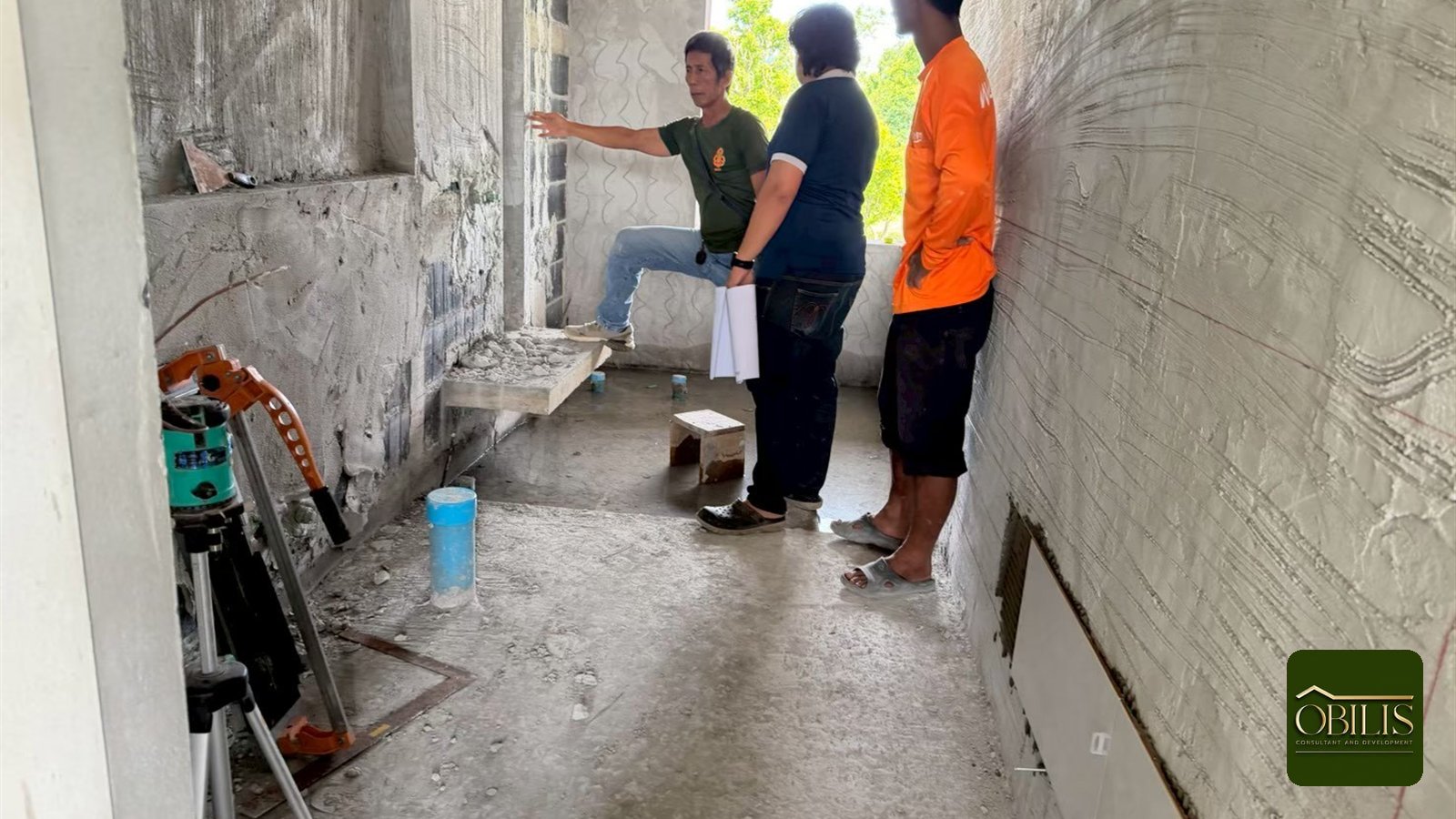
Construction has many points that must be inspected before they are covered up: reinforcing steel before concrete is poured, floor levels before tiles go down, water pipes before plastering. With an independent contractor, the person inspecting is the contractor himself or you, which means you need enough knowledge or you hire an independent supervisor to check at each stage. Owners living in Bangkok while building in Roi Et often get stuck exactly here.
A company has a site supervisor, someone other than the crew, who inspects at each stage and usually sends the owner periodic reports with photos. That cost is already in the price, but ask clearly how many houses one supervisor is looking after at the same time, because if it is too many, inspections become a formality.
Warranty is where the two differ most. An independent contractor usually gives a verbal guarantee or a short line in the contract, and getting repairs done depends on the relationship and his free time. A company has written warranty terms, clearly separating structure from finishes, and a registered legal entity you can take to court if it does not comply. Read the conditions carefully to see what is actually covered.
Contracts, payment stages and the risk of problems mid-build
The most common problem you hear about when building upcountry is a contractor abandoning the job. It usually starts with drawing down stage payments ahead of the work actually done and using the money on another project. When cash runs short, the work slows and then stops. A contract with an independent contractor therefore needs finely divided payment stages, payment only for work genuinely completed, and a final retention large enough to matter.
A home building company has a standard contract specifying payment stages, material specifications, timeline and penalties for delay. The risk of abandonment is lower because there is working capital and a reputation to protect, but it is not zero. A small company that takes on more than it can handle can fail too. Looking at finished houses, talking to previous owners and checking the company registration are still necessary.
The difference is clearest when a dispute arises. With an individual contractor, a claim for damages often produces nothing but paper, because there are no assets to enforce against. With a company, at minimum there is a contract, a quotation and a legal entity that is accountable. That is part of what the higher price buys: risk transferred to the other party.
Which to choose: look at yourself more than at the builder
An independent contractor suits someone who has time to visit the site regularly, has construction knowledge or a family member who can keep an eye on the work, already has plans ready, and is building something that is not too complex. A single-storey house in a village where the family lives nearby and has known the contractor for years is a case where an independent contractor delivers good results and real savings.
A home building company suits someone who lives far from the site, works full-time and can only visit on weekends, wants a design tailored to their own plot, or is building two storeys or more where the structure has to be properly calculated. People taking a bank loan usually go this way too, because banks want a contract and quotation from a registered company to assess the loan.
Whichever route you choose, you should have the same things in place: complete engineering drawings, a clearly written materials list, and a contract with payment stages tied to actual progress. The OBILIS team is happy to advise from the land inspection stage and help you plan the build, so you can see the full picture of budget, timeline and risk before deciding who to build with.
To get a rough budget before you talk to anyone, try our house price calculator, or contact the OBILIS team to talk through your plot.
Related reading: Temporary Electricity and Water for Construction in Thailand
Frequently Asked Questions
Can I hire an independent contractor and a separate engineer to supervise?
Yes, and it is a good option. An independent supervisor charges roughly per visit or per month, in exchange for having someone who knows what to look for check the critical points before they are covered up. The contract should also require the contractor to give notice before every concrete pour or plastering stage.
Do home building companies use their own crews or subcontract?
Most subcontract to crews by trade, such as a structure team, a roofing team and an electrical team, which is normal in the industry. The difference is that the company selects the teams, sets the standards and has a supervisor inspect. Ask how many houses the crew assigned to yours has already built with the company.
How much does the price per square metre differ between a company and a contractor?
Roughly 10 to 20 percent for a house of similar specification, but the figure varies by area, house size and what is included in the price. The right way to compare is to get the materials list and scope of work from both sides, lay them side by side, and see what the difference actually buys you.
ข้อมูลสำคัญโดยสรุป
| Contractor price gap | Roughly 10 to 20 percent below a company |
|---|---|
| VAT | 7 percent, often excluded by unregistered contractors |
| Permit drawings | Must be signed by a licensed engineer and architect, filed with the municipality or SAO |
| Inspection points before cover-up | 3 key points: reinforcing steel, floor levels, water pipes |
| Company warranty | Written terms, structure separated from finishes |
| Contractor payment stages | Finely divided, paid only for completed work, large final retention |
คำถามที่พบบ่อย
Can I hire an independent contractor and a separate engineer to supervise?
Yes, and it is a good option. An independent supervisor charges per visit or per month and checks the critical points before they are covered up, such as reinforcing steel before a concrete pour and water pipes before plastering. The contract should require the contractor to give notice before every pour or plastering stage.
Why is an independent contractor cheaper than a home building company?
A contractor quote is typically 10 to 20 percent lower because there is no design fee, no in-house engineer, no site supervisor and no office overhead. Some contractors are not VAT registered, so the 7 percent tax is excluded too. The quote may also leave out the building permit or parts of the electrical and plumbing work, so the final price often differs less than it first appears.
Do home building companies use their own crews or subcontract?
Most subcontract to crews by trade, such as a structure team, a roofing team and an electrical team, which is normal in the industry. The difference is that the company selects the teams, sets the standards and has a supervisor inspect. Ask how many houses the crew assigned to yours has already built with the company.
Should I choose a contractor or a home building company for a house upcountry?
Look at yourself more than at the builder. If you can visit the site regularly, already have plans and are building a simple single-storey house, an independent contractor delivers good results and real savings. If you live far away, want a design tailored to your plot, are building two storeys or more, or need a bank loan that requires a contract from a registered company, a home building company is the better fit.